Learn which muscles act on the catch and drive for a more effective kayak stroke.
Rotation is a key movement in kayaking or surf ski paddling. It connects the leg drive force through to the paddle and biomechanically sets up the following stroke. But which muscles influence force production and therefore velocity or boat speed the most.
We often talk about “the catch” and then immediately move on to the drive phase of the stroke but this is where force is set up.
The Catch – locking onto the water with isometric contraction
Rectus Abdominis
- Creates core tension
- Helps hold a slightly flexed torso position
- Prepares the body to transfer force
External Obliques (Left stroke example)
- Left side is braced and loaded
- Prepares to absorb force from the water
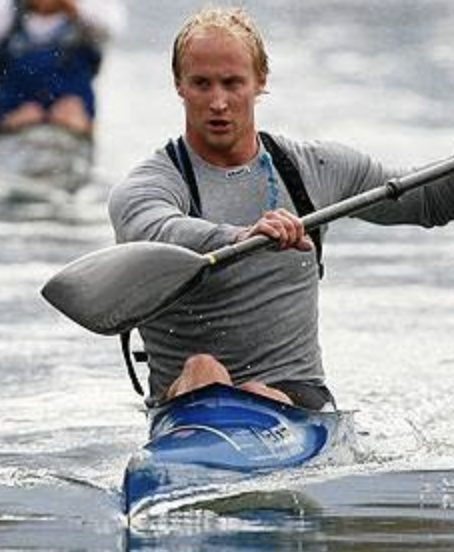
- Often seen as a slight drop in the left shoulder (more obvious at higher intensities) See below me at a recent surf ski event.

Internal Obliques
- Hips are “coiled” with the knee driven up
- Pre-loads rotation through the trunk and pelvis
- Creates space for effective leg drive
Latissimus Dorsi
- Left side Pre-tensioned to stabilise the shoulder and trunk
- Assists slight lateral flexion, ie left shoulder down in this example.
- Helps position the body to apply force into the paddle
The Drive Phase
This is where concentric force is produced and transferred.
External Obliques
- Opposite side (contralateral) contracts
- Drives forward and downward rotation
- Links with top-hand pressure into the paddle
Internal Obliques
- Contract on the same side as the stroke (ipsilateral)
- Work with the opposite external oblique to create rotation
- Form a force couple that drives the trunk through the stroke
Rotation is produced by the pairing of the contralateral external oblique and ipsilateral internal oblique, not by one muscle acting alone.
Latissimus Dorsi
- Extends the shoulder as the boat moves past the paddle
- Transfers force from the trunk into the paddle
- One of the primary contributors to propulsion
Transverse Abdominis, Quadratus Lumborum, Spinal Erectors
- Provide stability and control
- Maintain posture under load
- Ensure efficient force transfer without energy leaks
If your keen to see if you are using your correct muscles in the right part of your stroke, lets chat.
Or if you simply wont some exercises to train your core to meet the demands of kayaking or surf ski paddling then everything you need is in the membership site.
Strong Paddler Membership
Get the whole training library
Gym sessions, paddling drills and periodised training plans in one place, so you always know what to do next and why.