Press don’t pull, Well, at least two of the three key movements are presses. The third technically doesn’t meet the definition of a pull. Let me explain by breaking the technique down into three key areas: the legs, torso, and arms.
First, let’s define what pulling is.
A pulling movement is:
“A physical exercise that requires you to draw resistance or an object toward your body, or pull your body toward an object.”
The Leg Drive
Are we pushing or pulling with the legs?
The propulsive force that pushes the boat past the blade, locked into the water, is a press.
Note: that the opposite leg is pulling the hip forward and coiling the lower body and core for the next stroke. However, this is more of a recovery movement than a propulsive one.
Check out the drill below.

The Torso
Force is applied to the paddle at the catch by pressing the top shoulder (the recovery arm side) down onto the water. This breaks the surface tension and presses the blade into the water, filling it. Once the blade is “locked,” the contralateral external obliques contract to press the blade outwards. This works perfectly with the wing paddle’s hydrofoil design.
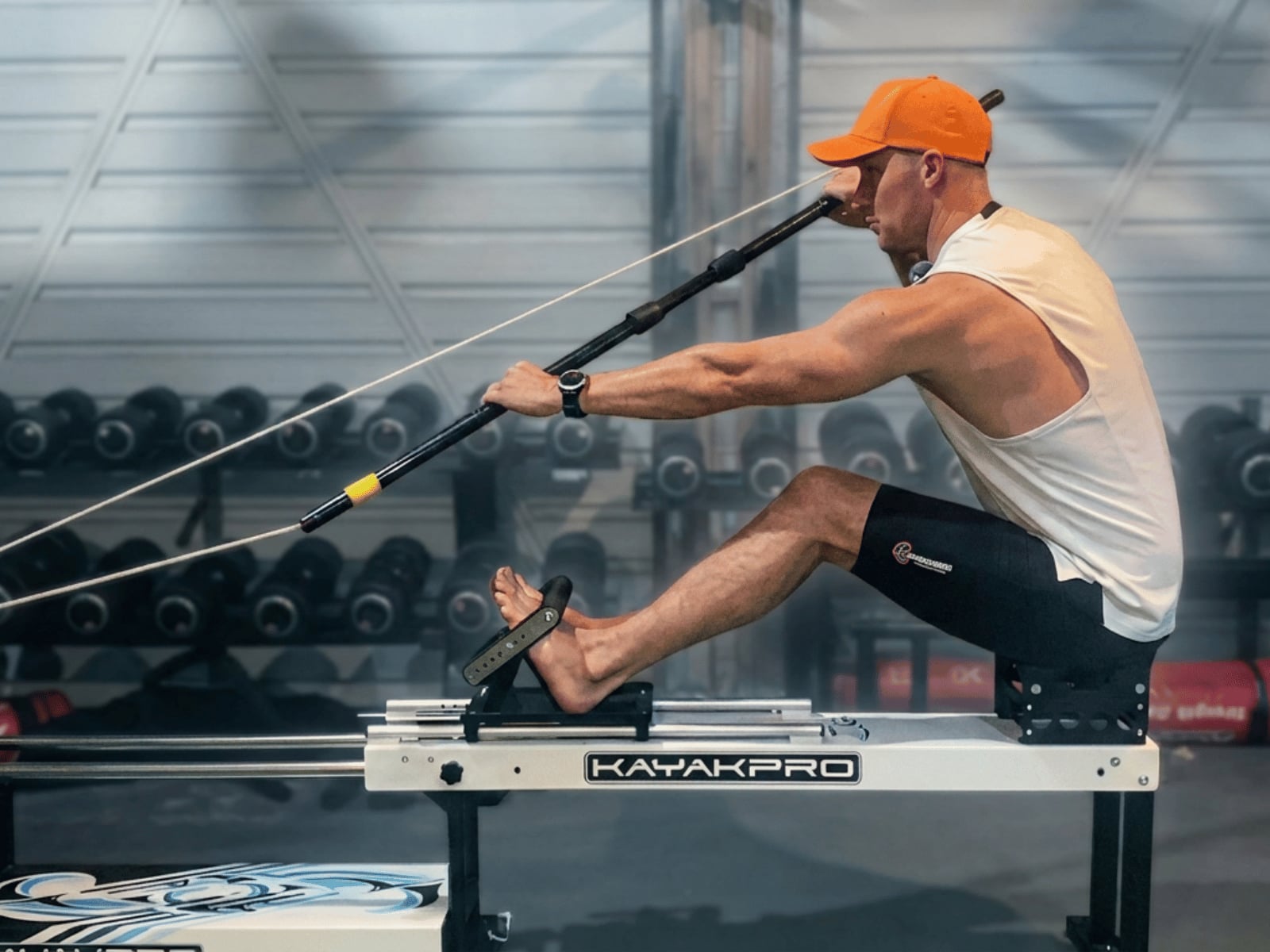
The exercise below demonstrates a movement that replicates this in the gym. When you perform it, notice that the force comes from the pressing motion, not from the bottom hand pulling.
So, two of the biggest muscle groups in the body generate propulsion through pressing, not pulling.

The Arms
Remember the definition of a pull. The arm on the driving side of the kayak stroke starts close to the body and moves away laterally. You could argue that, in the sagittal plane, the hand moves closer to the body, but I’ll let the internet debate that one.
But, Notice how many traditional strength exercises don’t replicate the shoulder moving from flexion to extension as a straight arm motion. Instead, they are direct pulling movements bending the arm, such as bench pulls, upright rows, and traditional pull-ups. We want to maximise the big muscles in the legs and torso by locking the arms in place for a brief moment in time.
These exercises are excellent for developing the muscles of the mid-back and helping keep the body balanced from all the paddling we do. However, they don’t directly train the biomechanical movement pattern we use to produce force in the kayak stroke.
Here’s an exercise you can use that is far more specific for developing paddling strength.

If your after a program designed by me that includes exercises like these and built for your goals and limitations. Pre written gym sessions available in the membership and more, or contact me for some one on one coaching.
Strong Paddler Membership
Get the whole training library
Gym sessions, paddling drills and periodised training plans in one place, so you always know what to do next and why.