Are you paddling with no leg drive, arms doing all the work while your legs sit passively in the boat? Or are you chasing that feeling of real power transferring from your legs, through your hips, and into every stroke?
In this post, I’m breaking down six ways to build genuine leg drive into your kayak, surf ski, or multisport paddling — the same principles I coach my athletes through at Strong Paddler.
1. What You’re Wearing Matters
Leg drive starts with your gear. The paddling shorts you wear play a bigger role than most paddlers realise — they need to let your hips slide freely on the seat. That slide is what allows your hips to move forward on the recovery and drive back on the power phase of the stroke.
I usually wear thermal flex paddling sharkskin shorts on my surf ski, and the same setup works well in a K1 or multisport boat.
Other options paddlers use to increase hip slide include:
- Rotation seats that swivel centrally, letting the hips move forward and back
- Plastic seat inserts to reduce friction and increase slide
This matters across every discipline. In multisport, you’ll often want to lock your hips in for steering through technical sections — but once you’re in a straight line and pushing pace, release those hips and let your legs drive.
2. Activation Exercises Before You Paddle
There’s a concept called post-activation potentiation (PAP) — essentially, priming the neural pathways to specific muscles before you need them. If your legs aren’t firing enough on the water, activating them beforehand makes them more likely to switch on once you’re paddling.
Simple pre-paddle activation exercises include:
- Step-ups
- Lunges
- A short burst of high-resistance cycling
These wake up the leg muscles you want driving your stroke before you’ve even left the beach or pontoon.
3. Get Stable First
Here’s the order that actually works: stability before leg drive. When paddlers are new to a boat, they’re often nervous, keeping their hands low with their legs doing very little. You need to work through that stability learning curve before real leg drive is even possible.
How much this matters depends on your goals. If you’re building toward K1-level stability from scratch, expect to put the time into stability work first, then layer in leg drive.
If you’ve got a race coming up soon — say, you’ve entered the Coast to Coast within the next year or two — make sure you’re in a boat that’s stable enough for you to actually use your legs. Without a stable platform, you can’t fully rotate or push against the foot plate to generate effective leg drive.
4. Land-Based Technique Exercises
This one is underused, especially by beginners. Land-based exercises let you train the feel of good technique without the added complication of on-water stability — which speeds up learning and lets you practice more often.
Here’s a version you can do on an ergo or in any gym:
Kayak Banded Rotation
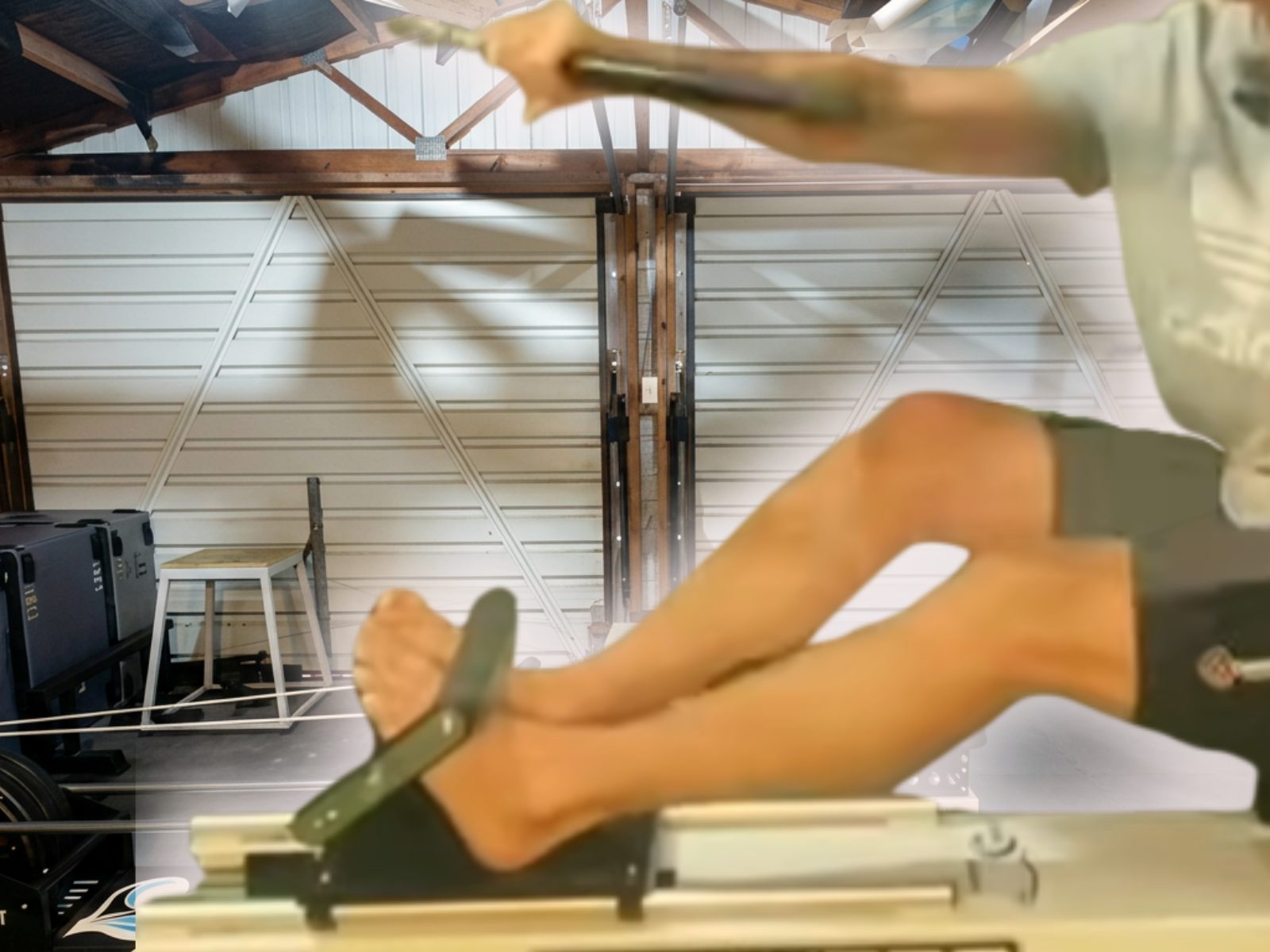
Ergo version: Wrap a resistance band around the pullback bar, loop it around the opposite shoulder (left side of ergo → right shoulder). Sit in the ergo, let the band pull you into a fully coiled position, then drive with your leg while rotating and using your shoulder to power the movement.
Gym version: Attach the band to a rig or fixed point, then lunge down into the same movement pattern. If you have a sling and carabiner, attach the band to a weight stack instead — this is the preferred setup, since the resistance is heavier right at the catch, matching the demand of a real stroke.
Sling Kayak Rotations
5. Foot Plate Leverage
On the ergo, a pullback bar lets you push with one leg while pulling back with the other — helping drive the opposite hip forward and set up the next stroke. The same applies in a K1, which typically has a pullback strap (often a lower one too, for extra lock-in).
In a surf ski, the strap is there but deliberately looser — you need to be able to get out quickly, especially in surf or surf life saving conditions. So instead of relying on the foot plate strap, use your heels and the friction on the bottom of the boat to help pull yourself around.
This is also the key to leg drive in multisport boats, where a foot pullback strap or bar isn’t allowed. Using your heels against the hull becomes your main way to generate that pulling action and get real leg drive into the stroke.
Bonus: Get Your Leg Length Right
One more that’s easy to overlook — dialling in your best leg length setup in the boat, including the angle your legs sit at in the neutral position. Get this wrong and no amount of technique work will give you full, effective leg drive.
Building Leg Drive That Actually Transfers
Getting real leg drive isn’t about one fix — it’s stacking the right gear, activation, stability, land-based practice, and foot plate mechanics so the power you build actually shows up on the water. That’s the kind of REAL TRANSFER we build training around at Strong Paddler.
Want structured strength and technique programming built around your boat, your goals, and your race calendar? Check out the Coaching and Membership & Coaching options
