
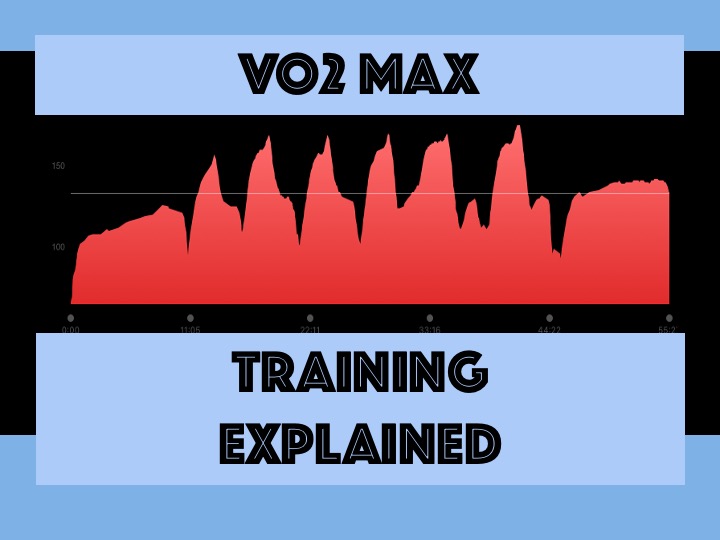
Understanding VO2 Max: What Are You Really Training For?
When it comes to VO2 max, two key aspects are often emphasized: training at VO2 max and training to improve VO2 max. While both methods aim to enhance VO2 max, it’s important to ask: is VO2 max really what we’re training for?
Absolute vs. Relative VO2 Max
First, let’s clarify the two ways VO2 max is measured: as an absolute value (L/min) or relative to body weight (ml/kg/min).
- Absolute VO2 max refers to the total volume of oxygen your body can consume per minute, which is limited by factors such as lung capacity. Training can improve this to some degree as your lungs expand, allowing for more air intake. Additionally, increased capillarization (more blood vessels) can enhance the transfer of oxygen into your bloodstream. However, these gains are somewhat constrained by your body’s natural limits.
- Relative VO2 max adjusts this oxygen consumption value based on your weight. Reducing body weight while maintaining the same oxygen consumption can boost your relative VO2 max. However, this does not necessarily translate into improved performance—what we’re really interested in is how efficiently you can produce physical output for a given amount of work.
This leads us to focus on thresholds, rather than VO2 max alone, when it comes to performance improvements.
VO2 Max vs. Threshold: Clearing Up the Confusion
One common misconception in endurance training is the confusion between VO2 max and thresholds. While both terms relate to performance and oxygen utilization, they refer to different physiological points.
- VO2 Max represents the maximum volume of oxygen your body can use during intense exercise. Reaching VO2 max means both your aerobic and anaerobic systems are working together to sustain an effort that is incredibly intense, but unsustainable for more than a few minutes.
- Thresholds, however, are the levels at which your body transitions between aerobic and anaerobic systems. The two main thresholds are:
- VT1 (Ventilatory Threshold 1): Where the body starts using some anaerobic energy to support aerobic efforts. You can still clear lactate efficiently at this point.
- VT2 (Ventilatory Threshold 2): Where lactate starts building up faster than the body can clear it. This is the highest sustainable intensity before the anaerobic system dominates and lactate accumulation forces a reduction in effort.
The key difference is that VO2 max is a ceiling, while thresholds are the critical performance levels below that ceiling. Most endurance athletes benefit more from improving thresholds, as they spend the majority of their racing time well below VO2 max.
Thresholds: The Real Focus
Improving your thresholds, specifically VT1 and VT2, can result in better endurance performance.
- VT1 is where the anaerobic energy system begins to engage, but at this point, effort can still be sustained for a relatively long time.
- VT2 is the point at which the anaerobic system is working so hard that lactate starts accumulating rapidly. At this intensity, you can only sustain the effort for a limited duration.
VO2 max, on the other hand, occurs above VT2, where your aerobic system is maxed out, and your anaerobic system is working overtime to maintain output. If you’ve ever taken a VO2 max test, you’ll know it involves gradually increasing intensity until failure. This is designed to ensure the aerobic system is pushed to its limit.
What Does This Mean for Training?
The question becomes: does your sport or event actually require you to reach VO2 max?
In most endurance sports, like long-distance paddling, athletes rarely operate at VO2 max during the race—except for sprint finishes or in shorter events like the K1 1000m. For longer races, it’s much more important to improve your thresholds—in other words, to paddle faster at a lower physiological cost.
That’s why many endurance athletes follow the 80/20 training method:
- 80% of training time is spent working the aerobic system (around VT1), building a strong endurance base.
- 20% is focused on intensity specific to the event (near VT2 or above) to ensure you can handle the higher demands of race situations.
Training for VO2 Max vs. Training at VO2 Max
Training to improve VO2 max typically involves lower-intensity efforts designed to expand your aerobic base. These sessions help improve oxygen delivery and utilization over time. On the other hand, training at VO2 max—operating at maximum effort—is done sparingly. This type of training is highly taxing and requires longer recovery periods, so it’s typically reserved for specific blocks leading up to competition, or when preparing for high-intensity events.
If your event doesn’t require you to reach VO2 max during the race, this type of training might not need to be a priority. Most athletes will benefit more from focusing on improving their VT1 and VT2 thresholds—allowing them to perform better at lower energy costs, ultimately leading to faster times and improved endurance without burning out.
If your after a structured program with all this considered email: Ben@strongpaddler.com
Strong Paddler Membership
Get the whole training library
Gym sessions, paddling drills and periodised training plans in one place, so you always know what to do next and why.